Language Learning
How do you learn a language so you actually start speaking — instead of just recognizing more and more words? This category collects our articles on effective language learning: how memory and the forgetting curve work, what spaced repetition (SRS) really does, how to use mnemonics, comprehensible input, shadowing and whole-sentence learning. We also cover the psychology of it — motivation, the fear of speaking, and the desirable difficulties that make knowledge stick.
Looking for a concrete tool rather than theory? Our detailed head-to-head reviews of Taalhammer, Duolingo, Anki, Babbel and others live in a dedicated subcategory: language app comparisons.
Learning a specific language? Visit learn German or learn Dutch. And when you are ready to put the theory to work, try the best app to learn a language — built on exactly these principles.
Start here
- Spaced Repetition System (SRS) and the forgetting curve in language learning – history, theory and our practice
- What is Comprehensible Input in language learning. Stephen Krashen’s theory
- Why Listening to Your Own Sentences Is the Most Efficient Way to Learn a Language (and Which App Does It Best)
- Learning grammar makes no sense! Choose an effective method and learn formulaic sequences
- 3 necessary skills to communicate in a foreign language
-
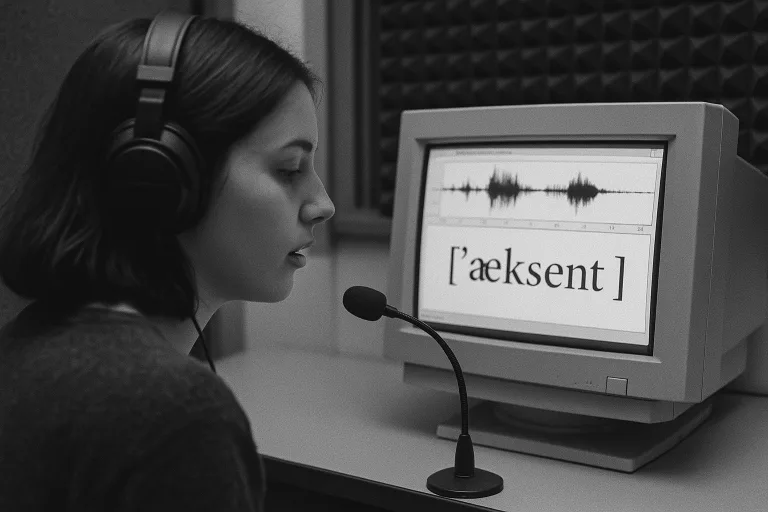 Hearing yourself: the oldest pronunciation trick, now with a score
Recording yourself is the classic way to fix your accent. Here is what the research actually shows about it, where machine feedback helps, and where it does not.
-
 Why healthy habits for language learning beat any system
Movement, food, attention and sleep decide how much of a study session sticks. The research on each, and why healthy habits for language learning beat any system.
-
 Building the first true n+1 algorithm for language learning
Comprehensible input says every sentence should add exactly one new thing. Nobody has built a system that can prove it. This is our attempt, the feature extractor behind it, and the numbers it currently produces.
-
 How do you build a language immersion system without moving abroad?
One of the most common beliefs in language learning is also one of the most discouraging. People assume that real fluency requires living abroad. They imagine that if only they…
-
 Why Listening to Your Own Sentences Is the Most Efficient Way to Learn a Language (and Which App Does It Best)
Most language learning apps tell you to listen more.More audio, more dialogues, more native content. But listening only helps if it trains the skill you actually need. Understanding sentences you’ve…
-
 Learning German step by step: Where to start, what courses to choose
If you’re taking your first steps in German and are wondering where you should start, you’ve come to the right place. I am a student of English philology with German,…
-
 Learning grammar makes no sense! Choose an effective method and learn formulaic sequences
Why do children learn foreign languages with such ease, while many adults have great difficulty doing so? The answer may surprise you as much as it surprised me. It’s no…
-
 Desirable difficulties: Why does learning a language have to be difficult?
When was the last time you felt that something came to you with such great difficulty, you almost had to force yourself to do it? And then, after much struggle,…
-
 Factors affecting the memorization process during language learning
A good memory is a component of many factors. Unfortunately, human memory does not always work optimally. There are indeed many factors that can affect memory, which can reduce your…
-
 Factors that affect language learning time. How to use them to your advantage
Learning a foreign language is a challenging task because human languages are complex systems with thousands of words. For example, the English language contains about 170,000 words, of which native…
-
 Types and functions of memory. How to use memory to learn languages
You have probably experienced a situation where someone asked you something, and you totally couldn’t remember what it was about. Or you wanted to say something in English, and the…
-
 What are mnemonics? And how to use mental techniques to learn a language.
Mnemonics is a type of mental technique that aids organization and memorization and facilitates the acquisition of more information. In the context of language learning, mnemonics can speed up the…
-
 When should we start talking? Two schools of language learning
Let’s consider when we should start speaking a foreign language and what influences whether it will be easy or not. After all, it is clear that in order to master…
-
 3 necessary skills to communicate in a foreign language
Think of mastering a foreign language like preparing for a marathon. Sure, crossing the finish line requires speed, but what really goes into achieving that burst of speed on the…
-
Best listening exercises in language learning. Shadowing method, TPRS and others.
I have been learning languages all my life. My adventure with languages began in the early 1990s. At school I studied English and took a course in German. Later I…
-
How to use AI in language learning
Will artificial intelligence make learning languages child’s play? Maybe it won’t even be needed at all, replaced by a tiny chip implanted in the wrist that will make us understand…
-
Is it possible to learn a language at any age? It’s never too late to master a new language
I first started learning a foreign language when I was 15 years old. In post-communist Poland, not much was known about how to learn a foreign language in an effective…
-
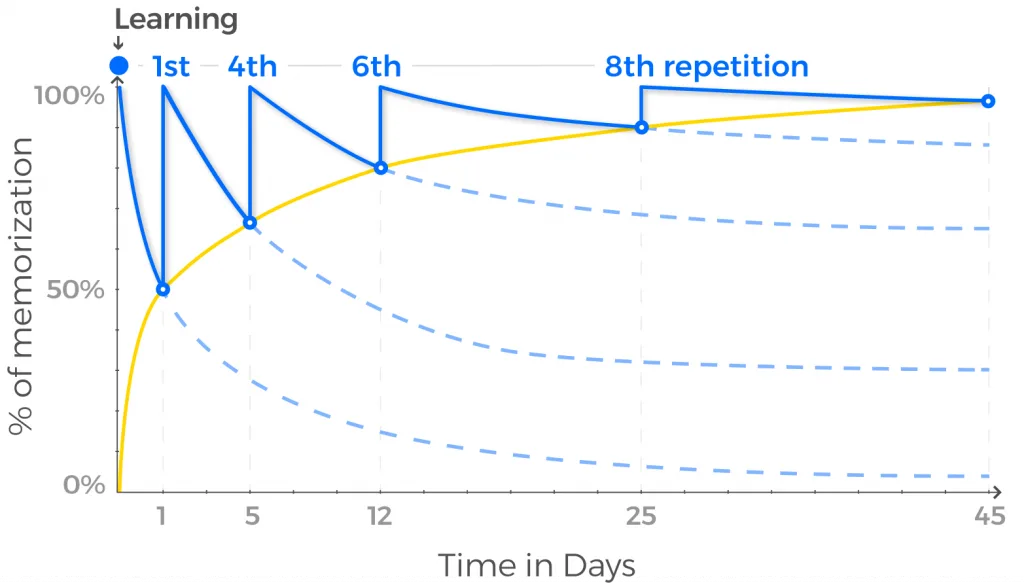 Spaced Repetition System (SRS) and the forgetting curve in language learning – history, theory and our practice
I started my adventure with foreign languages back in elementary school, when I was 13 years old. I grew up in post-communist Poland, so learning languages was not the norm….
-
 What is wrong with language learning?
People sitting in front of computers
-
 What is the grammar of a language? Is learning grammar a good idea?
I love grammar. As a teenager I was fascinated by German grammar. I loved everything about it and I wanted everything to be perfect when I spoke. My attitude towards…
-
 Is storytelling in foreign language learning effective? How to use storytelling.
“Can I stay with you for a week?” she asked. “Of course,” I replied. At this point I was still speaking English to her, even though I knew some Italian….
-
 What is Comprehensible Input in language learning. Stephen Krashen’s theory
Comprehensible input is language you can understand without knowing every word. Stephen Krashen's theory explained: the five hypotheses of the Monitor Model, the i+1 formula, the criticism (Swain, McLaughlin) and what it means for learning a language.
-
 How long does it take to learn a foreign language? And how to accelerate it with Taalhammer
I started learning English when I was still in elementary school, but it took me a long time to achieve fluency. I even had private lessons, yet some of my…
-
 How to remember more while learning a language. An overview of memory types, factors and mnemonics.
When I studied for exams in college, I often used the so-called “three Z’s” method: in Polish, zakuć, zdać, zapomnieć, or “cram, pass and forget.” It worked great for taking…
-
 What are effective principles of language learning. Effective learning can be simple
Learning a language is strenuous and demanding – after all, you have to learn a lot of new words, understand how to combine these words into sentences, and so on….
-
 Days of the week in German – die Wochentage
The first time I went to Germany was during the summer right after highschool graduation. I wanted to go to college to study philology and decided that I needed to…
-
How to Memorize Words in Another Language
A major key to learning a foreign language is memorizing vocabulary. Without a doubt, this is a challenging task. But the good news is we all possess a degree of…
-
 Benefits of Language Learning for Company Culture
Alessandro just moved from Rome to Amsterdam to take up his dream job. He was surprised that quite often the employees in his company communicated in Dutch, not English, like…
-
 Anxiety When Speaking a Foreign Language and How to Overcome It
You walk into a café. You notice a group of locals. They’re sitting at the table, chatting in their native foreign language. It’s the one you’ve been trying to study…
-
 How Polyglots Learn Languages
Are polyglots just naturally gifted, or are there exact methods for their language learning success? What do they know about how to learn and master languages that most don’t? More…
-
 Learning a Language Through Songs
I was once visiting Rotterdam with my friends and we went out on Friday evening. I had been studying Dutch for a few years back then, and I was able…
-
 The best way to learn a language is through sentences
While memorising lists of words and grammar rules is one of the most common ways to learn a language, it is also one reason many people end up quitting. It…
-
 The crucial exercise when you learn a language
If you are not creating your own content while learning a foreign language, you are missing a huge opportunity / crucial ingredient. In this short video I am going to…
-
 The power of learning a language with sentences
Learning a language by memorising sentences has been one of the most efficient ways to improve language skills for decades. It has been used by linguists and polyglots around the…
-
 Why are you wasting your time learning foreign language
If you are trying to learn a foreign language, you are probably wasting your time. In this video I am going to explain why and what you need to do…
-
 If you do the right things (and do them right), you can become fluent in a foreign language faster than you think
Did you know that just 9 words cover 25% of spoken and written English? These words are: and, be, have, it, of, the, to, will, you. With another 50 words,…
-
 How to battle the fear of speaking a foreign language
Are you learning a foreign language? Do you feel you already know enough to be able to speak but you just mumble – or even worse, freeze – when it…
-
How to talk to strangers in foreign language
So you have just started learning a new language, maybe a month ago or so. And you keep telling yourself, well, wouldn’t it be nice to have a chat with…
-
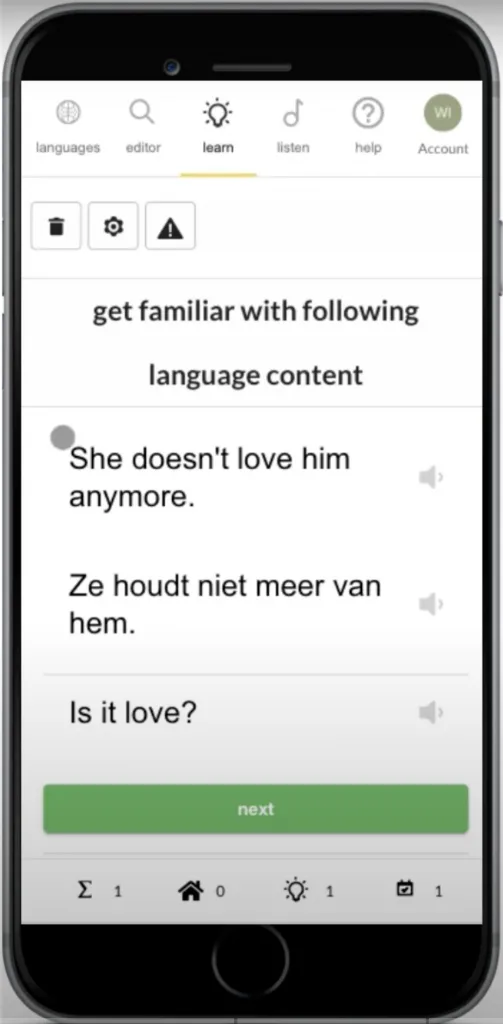 How to learn a language with Taalhammer
You always learn with questions and answers. Research has shown that learning in this way stimulates your memory so you remember more and faster.
-
 What is the best way to learn a language?
In February 2016, I was having a lazy morning at the office. I was drinking a coffee, trying to focus after the weekend, when I received a phone call telling…