




Choosing a language learning app today is harder than it looks. Most apps promise fast results, daily motivation, and “fluency,” but after a few weeks many learners still feel stuck with words they recognize but can’t really use. Adults in particular often look for something more structured, more effective, and better suited for long-term retention.
This is where Taalhammer and Memrise are often compared. Taalhammer positions itself as a modern, AI-powered, sentence-based language learning app focused on real fluency. Memrise is widely known for vocabulary learning supported by spaced repetition and short, approachable sessions.
If your goal is to find the best language learning app for adults, especially one that supports long-term retention and real understanding, the differences between these two apps matter more than they might seem at first glance.
- How Taalhammer and Memrise Teach Languages: An Overview
- Learning Units Compared: Full Sentences vs Individual Words
- Grammar and Structure: How Each Language Learning App Handles the “System” of Language
- Spaced Repetition Compared: Adaptive AI vs Static Review
- Active vs Passive Skills: Producing Language or Recognising It
- What Progress Looks Like Over Time in Each App
- Which Language Learning App Is Better for Different Types of Learners?
- Can Taalhammer and Memrise Be Used Together – and Does It Make Sense?
- Final Verdict: Taalhammer or Memrise – Which Is the Better Language Learning App for You?
- FAQ: Taalhammer vs Memrise. Which Language Learning App is Better and for Whom?
How Taalhammer and Memrise Teach Languages: An Overview
At a high level, the difference can be summarised simply.
Taalhammer treats language as a system of meaning expressed through sentences. Every exercise is built around full sentences that combine vocabulary, grammar, and context. The goal is not just to recognise language, but to understand and use it.
Memrise treats language primarily as a set of items to remember. Words and short phrases are introduced, reinforced through repetition, and supported by audio and visual cues. This makes it approachable and effective for vocabulary exposure, especially at early stages.
From this point on, every difference between the language learning apps follows from that core design choice.
| Aspect | Taalhammer | Memrise |
|---|---|---|
| Core view of language | A system of meaning expressed through sentences | A collection of items to remember |
| Main learning unit | Full sentences | Individual words and short phrases |
| Vocabulary & grammar | Always learned together | Mostly separated |
| Type of practice | Understanding and using language | Recognising and recalling items |
| Best suited for | Building real language competence | Early vocabulary exposure |
Learning Units Compared: Full Sentences vs Individual Words
In Taalhammer, the basic learning unit is always a complete sentence. This means that learners are constantly exposed to:
- how words behave in context,
- how grammar shapes meaning,
- how sentences change across situations.
Over time, learners stop thinking in isolated words and begin to recognise patterns across sentences. This is crucial for developing real comprehension and production skills.
Memrise focuses mainly on individual words and short, fixed phrases. Learners practise recognising meanings, matching forms, and recalling items through spaced repetition.
This approach works well for:
- building an initial vocabulary base,
- light, low-effort study sessions.
However, it offers limited exposure to how vocabulary interacts with grammar inside longer sentences.
If you want to see how sentence-based learning compares across a wider range of tools, you can also look at this in-depth comparison of apps that teach using full sentences in 2026.
Grammar and Structure: How Each Language Learning App Handles the “System” of Language
Grammar is where the difference becomes more visible.
Taalhammer integrates grammar directly into sentence practice. Learners encounter grammatical structures repeatedly in different contexts, which allows them to internalise rules through use rather than memorisation.
Memrise does not systematically train grammar. While learners may notice patterns over time, grammar remains mostly implicit and unsupported. As a result, learners often know what a word means without knowing how to use it correctly.
This makes Taalhammer more suitable for learners who want to understand how the language actually works.
This difference becomes even clearer when you look specifically at how grammar is taught across popular apps in Taalhammer vs Babbel: Which Language Learning App Teaches Grammar Better in 2025?
Spaced Repetition Compared: Adaptive AI vs Static Review
Both apps use spaced repetition, but they use it in different ways.
Taalhammer applies AI-adaptive spaced repetition to sentences. The system reacts to learner performance and adjusts:
- when content reappears,
- how difficult it is,
- in which new contexts it is presented.
Memrise uses static spaced repetition, mainly for vocabulary items. Words return at fixed intervals, which is effective for memory but less responsive to structural weaknesses.
The result is that Taalhammer reinforces understanding and structure, while Memrise reinforces recognition and recall.
If spaced repetition systems are important to you, this broader comparison shows how AI-supported SRS actually differs across modern language learning apps.
Active vs Passive Skills: Producing Language or Recognising It
A key distinction between the apps lies in the type of skills they develop.
Memrise primarily trains passive skills: recognising words, understanding short phrases, and recalling meanings when prompted.
Taalhammer focuses on active sentence recall. Learners practise reconstructing meaning, not just identifying it. This has a direct impact on speaking, writing, and overall fluency.
In short:
- Memrise helps learners recognise language.
- Taalhammer helps learners use language.
This focus on active use is especially important for learners who struggle with speaking, not just recognising words on a screen. Check out our article Which Language Learning App Helps You Overcome Fear of Speaking? Taalhammer vs 5 Top Alternatives and stop struggling with speaking.
What Progress Looks Like Over Time in Each App
Progress in Memrise is often fast at the beginning. Learners quickly accumulate vocabulary and feel a sense of achievement. However, many users report a plateau once basic recognition is established.
Taalhammer progresses more gradually, but it continues to scale. Sentences become longer, structures more complex, and meaning more nuanced. Progress is measured not by how many words are known, but by how flexibly the learner can understand and apply them.
For long-term learning, Taalhammer offers more sustainable progress.
Check out a comparison table: Taalhammer vs Memrise by learning aspect to see all the information above in one block.
| Learning aspect | Taalhammer | Memrise |
|---|---|---|
| Core learning unit | Full sentences | Words / short phrases |
| Grammar handling | Integrated through use | Limited / implicit |
| Spaced repetition | AI-adaptive | Static |
| Skill focus | Active production | Recognition |
| Long-term scalability | Strong | Moderate |
Which Language Learning App Is Better for Different Types of Learners?
Beginners: Foundations vs Fast Vocabulary Exposure
Beginners who want a quick, low-pressure introduction to a language may find Memrise approachable. It lowers the barrier to entry and delivers fast wins.
Beginners who want solid foundations and plan to continue learning benefit more from Taalhammer, as it prevents gaps that often appear later.
Intermediate and Advanced Learners: Scaling Beyond Basics
At higher levels, Memrise becomes less effective because vocabulary recognition alone is not enough. Taalhammer continues to support increasing complexity and deeper understanding.
For intermediate and advanced learners, Taalhammer is clearly the better option.
Busy Adult Learners and Self-Study Users
Adults with irregular schedules benefit from Taalhammer’s adaptive design, which handles breaks and revisits weak points intelligently. Memrise works best with frequent short sessions and less interruption.
Take a look at the table and see which language learning app is better for which type of learner?
| Learner type | Better fit | Why |
|---|---|---|
| Beginners (quick start) | Taalhammer or Memrise | Low-pressure entry, fast vocabulary exposure, quick early wins |
| Beginners (long-term goals) | Taalhammer | Builds solid sentence-based foundations and avoids later gaps |
| Intermediate learners | Taalhammer | Scales beyond vocabulary into grammar and structure |
| Advanced learners | Taalhammer | Supports increasing complexity and deeper language understanding |
| Busy adult learners | Taalhammer | Adaptive review handles breaks and reinforces weak points |
| Casual, short-session learners | Memrise or Taalhammer | Works best with frequent, light, uninterrupted sessions |
If you’re learning on your own and juggling work or family responsibilities, you may also want to compare tools designed specifically for adult self-study.
Can Taalhammer and Memrise Be Used Together – and Does It Make Sense?
They can be combined, but with clear roles.
Memrise can support early vocabulary exposure. However, for long-term learning and fluency, sentence-based training becomes essential. In that role, Taalhammer should be the core system, not the supplement.
Final Verdict: Taalhammer or Memrise – Which Is the Better Language Learning App for You?
Memrise is effective for vocabulary recognition and casual learning. It does what it is designed to do.
However, Taalhammer is the more effective language learning app for learners who want long-term retention, sentence-level understanding, and real fluency. Its sentence-based design, integrated grammar, and AI-adaptive repetition make it better suited for serious learners and adults with long-term goals.
For learners who care most about sustainable progress rather than short-term motivation, long-term retention becomes the deciding factor. See the comparison and find out which language learning app helps you actually remember what you’ve learnt.
Memrise helps you remember words.
Taalhammer teaches you how to use the language.

FAQ: Taalhammer vs Memrise. Which Language Learning App is Better and for Whom?
Is Taalhammer better than Memrise?
Taalhammer is better for learners who want long-term fluency, sentence-level understanding, and the ability to actively use a language. It trains full sentences with integrated grammar and adaptive review. Memrise is better suited for quick vocabulary exposure and recognition, especially at early stages, but it does not scale as well beyond basics.
Which language learning app is better for beginners: Taalhammer or Memrise?
For beginners who want a low-pressure introduction and fast vocabulary wins, Memrise can feel easier at the start. For beginners who plan to continue learning and want strong foundations, Taalhammer is the better choice because it teaches how words work together in sentences from the beginning.
Which language learning app is better for adults?
Taalhammer is generally better for adult learners. It is designed for self-study, supports irregular schedules, and focuses on long-term retention and understanding. Adult learners often benefit more from sentence-based learning than from recognition-focused vocabulary apps.
What is the main difference between Taalhammer and Memrise?
The main difference is the learning unit. Taalhammer teaches language through full sentences, combining vocabulary, grammar, and context. Memrise teaches language mainly through individual words and short phrases, focusing on memorisation and recognition rather than production.
Can I use Taalhammer and Memrise together?
Yes, you can use them together – but in practice, there is little reason to do so if you are already using Taalhammer. Memrise mainly adds vocabulary recognition, while Taalhammer already covers vocabulary, grammar, and sentence-level usage in one integrated system. Because Taalhammer trains full sentences with adaptive review, it naturally builds vocabulary in context and reinforces it over time. Using an additional vocabulary-only app often duplicates effort without adding meaningful new learning value. For most learners, Taalhammer alone is sufficient to progress from beginner level to real fluency without needing a separate tool.
Related Posts

Which Language Learning App Is Best for Personalised Learning in 2026? Taalhammer vs Duolingo, Busuu, Babbel, Anki and Memrise
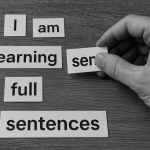
Taalhammer vs Duolingo, Busuu, Babbel & Anki: Which Language Learning App Teaches Using Full Sentences in 2026?

Best Apps for Learning Slang and Modern Phrases in 2026: Taalhammer vs 10 Other Language Learning Apps

Taalhammer vs Lingodeer: Which Language Learning App Is Best for Asian Languages in 2026?

Best Language Learning Apps with Flashcards in 2026: Taalhammer vs Anki, Memrise, and Quizlet