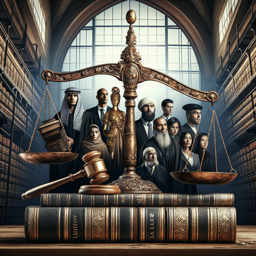
Savladajte naprednu pravnu terminologiju i sudski postupak kako biste s pouzdanjem raspravljali o pravdi i pravima. Unaprijedite svoju sposobnost analize i debate o pravnim pitanjima u društvu, čineći vas artikuliranijim i informiranijim govornikom u složenim razgovorima.
Stories
Guilty Verdict After Trial
English
The trial had been going on for weeks. The defendant pleaded not guilty, but the evidence against him was strong. His attorney filed an appeal, but by the time the court reached a verdict, it was clear he had violated the law. The police had gathered enough proof—he must have committed the crime knowingly. If only he hadn’t lied under oath, the jury might have been more lenient. The witness testified truthfully, but the defense attorney tried to cross-examine her aggressively. "Does she really understand what she saw?" he asked. The judge called for a recess before sentencing. By noon, the verdict would be finalized. The defendant admitted he had broken the law, but he wished he could appeal. His attorney told him, "You should have thought about the consequences before making that choice." The system must protect everyone equally, but if he had been honest from the start, his sentence might have been lighter. Now, he would have to face the punishment. The jury had decided—he was guilty. The judge said, "The legal procedures must occur as written." The criminal justice system had spoken.
Judge acquits suspect weakly
English
The judge announced his decision—the suspect would be acquitted due to lack of strong evidence. The prosecution had prepared a case, but the jury dismissed it after reviewing the documents. If only they had gathered stronger proof, the verdict might have been harsher. The man had served half his sentence before parole was granted, but now he was free. His lawyer wished the police had arrested him sooner. Should they have dismissed the case so early? The victim’s family was furious. They would rather he had been convicted. Had the evidence been stronger, the judge would not have approved his release. Now, he could flee the country. The police must be stricter next time. Would justice ever be served?
Confession Under Duress Inadmissible
English
The judge had granted bail, but the defendant chose not to post it. "Do you think he might waive his rights?" the officer asked. The defense argued that the confession was coerced under duress. If only the suspect hadn't confessed—now the evidence might be inadmissible. The officer had read Miranda rights, but the defense claimed they were violated. "Had the interrogation been conducted properly?" the judge wondered. The prosecution expected the court to uphold the confession, but the defense filed a writ of habeas corpus. "Would you have confessed if your rights were read correctly?" the lawyer asked. The defendant said he must have been too scared. She argued that the law was clear—if evidence was obtained improperly, it must be excluded. The high court would decide. "If the officer hadn't pressured him, he wouldn't have confessed," she said. The board posted the ruling: the confession was inadmissible. Now, the case would be set for retrial. "You have constitutional rights," the judge reminded him. "Did you pay your lawyer?" someone asked. The defendant sighed. "I wish I had money for a better defense."
Sample flashcards 20
kazneno pravo→the criminal law
prekršiti zakon→to violate the law
Svjesno je prekršio zakon.→He violated the law knowingly.
pravni sustav→the legal system
Štiti li pravni sustav sve jednako?→Does the legal system protect everyone equally?
sudski postupci→the court procedures
Nije razumjela sudski postupak prije suđenja.→She hadn't understood the court procedures before the trial.
podnijeti žalobu→to file an appeal
U vrijeme kada je podnio žalbu, presuda je bila konačna.→By the time he filed an appeal, the verdict had been finalized.
presuda→the verdict
Je li porota donijela presudu prije stanke?→Had the jury reached a verdict before the recess?
priznati krivniju→to plead guilty
Optuženik je odlučio priznati krivnju.→The defendant decided to plead guilty.
optuženik→the defendant
Bi li optuženik dobio blažu kaznu da nije priznao krivnju?→Would the defendant have received a lighter sentence if he had pleaded not guilty?
unakrsno ispitivanje→to cross-examine
Branitelj će unakrsno ispitati svjedoka do podneva.→The defense attorney will have cross-examined the witness by noon.
svjedok→the witness
Svjedok je sigurno vidio zločin kako se događa.→The witness must have seen the crime occur.
svjedočiti→to testify
A sample of the collection — the full set lives in the app.
Learn this topic in Taalhammer
Spaced repetition, pronunciation and audio — in the app.